

 Facebook
 X
X
 Pinterest
 Copy Link
Ah, July. The month of pool floats, backyard barbecues, and desperately trying to find a sliver of shade. But while you’re enjoying the peak of summer, it’s also time for a gentle reality check: we are officially a month into hurricane season, and the historical peak (August through October) is just around the corner.
Right now, the skies might be clear, but that’s exactly why July is the sweet spot for hurricane prep. Preparing today means you won’t be fighting someone over the last case of water at the grocery store while a storm is staring down the coast.
Let’s break down how to get your home and family storm-ready this month without breaking a sweat.
Why July Prep is a Total Game-Changer
Most people wait until a storm is named to start prepping. Honestly? That’s a recipe for long lines, empty shelves, and high stress. Taking action in July gives you three major advantages:
-
Fully Stocked Shelves: Generators, plywood, and batteries are actually available right now.
-
Zero Panic: You can make logical decisions instead of adrenaline-fueled panic buys.
-
Time for Insurance: Did you know most flood insurance policies have a 30-day waiting period before they kick in? If you buy a policy today, it will be fully active by the time the season heats up.
The July Hurricane Preparedness Checklist
You don’t need to do everything in one afternoon. Break it down into these three manageable steps over the next couple of weeks.
1. Audit Your Emergency Supply Kit
Go look at that bin in your closet. If the canned goods expired three years ago, or your flashlights are leaking battery acid, it’s time for an upgrade.
Pro-Tip: Don’t just pack for survival; pack for comfort. Being without power for a week sucks significantly less if you actually like the food you’re eating.
Here is what your core kit should look like:
Water 1 gallon per person, per day. Plan for a minimum of 3 days for evacuation, 14 days for home.
Food Non-perishable, protein-dense. Think peanut butter, tuna, protein bars, and foods that don’t make you thirsty.
Power Flashlights, power banks, batteries. Invest in a hand-crank or solar-powered weather radio.
Medical First aid kit & prescriptions. Keep at least a 30-day supply of essential medications.
Comfort Bug spray, tarps, battery fans. Trust us, a portable, battery-operated fan is worth its weight in gold.
2. Formulate Your Evacuation Plan
If local authorities issue an evacuation order, “we’ll just wing it” is not a strategy. Sitting down with your family now to map things out takes less than 20 minutes.
-
Know Your Zone: Look up your local evacuation zone. If you are in a low-lying area or a mobile home, you will likely need to leave early.
-
Pick Two Destinations: Identify an in-town option (like a friend’s sturdy house outside the flood zone) and an out-of-town option.
-
Don’t Forget the Pets: Many emergency shelters don’t accept pets. Pre-identify pet-friendly hotels or a safe relative’s place where your furry co-pilots are welcome.
3. Fortify Your Fortress
Don’t wait for a storm warning to realize your gutters are blocked or your trees are overgrown.
-
Trim the Trees: Dead branches turn into missiles in 90 mph winds. Prune them back now.
-
Clear the Yard: Walk around your property. Items like patio furniture, trampolines, and grills will need to be brought inside or securely anchored if a storm approaches.
-
Check the Roof and Gutters: Clean gutters ensure heavy rains flow away from your foundation rather than into your ceiling.
Myth-Busting: The Window Tape Lie
Let’s bust one major myth before we wrap up: Do not tape your windows. Taping X-shapes on your glass windows does absolutely nothing to prevent them from breaking. In fact, it’s actually more dangerous because it creates larger, heavier, more lethal shards of flying glass. If you want to protect your windows, invest in proper plywood or impact-rated storm shutters. Leave the duct tape in the drawer.
Stay Safe, Stay Informed
Preparing for hurricane season doesn’t mean living in fear; it means giving yourself peace of mind so you can actually enjoy the rest of your summer. Take a few hours this month to get your supplies and plans dialed in. Your future self will thank you!
What is the one thing you always forget to put in your emergency kit? Let us know in the comments below!
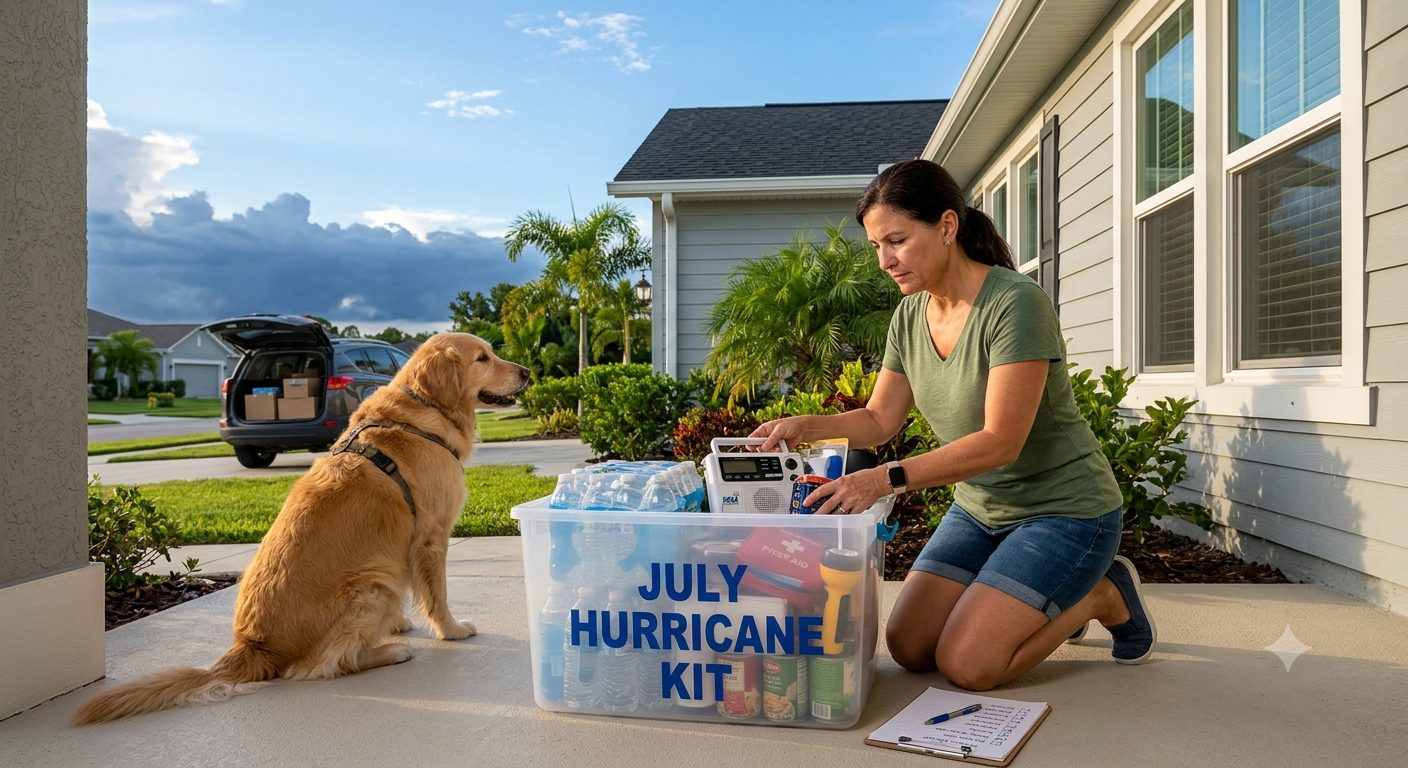
Taking advantage of the July calm: Getting your emergency kit squared away now means zero panic later.


